综合题
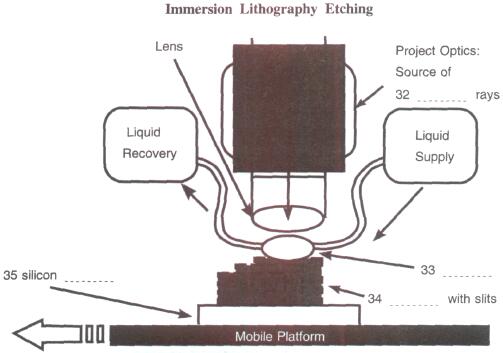
Label the diagram below.
Choose NO MORE THAN TWO WORDS from the passage for each answer.
Write your answers in boxes 32-35 on your answer sheet.
您可能感兴趣的题目
-
You should spend about 20 minutes on Questions 1-13 which are based on Reading Passage 1 below.
Questions 1-9
Reading Passage 1 has nine paragraphs, A-I.
Choose the correct heading for each paragraph from the list of headings below.
Write the correct number, i-xii, in boxes 1-9 on your answer sheet.
List of Headings
i Island legends
ii Resources for exchange
iii Competition for fishing rights
iv The low cost of equipment
v Agatti’s favourable location
vi Rising income levels
vii The social nature of reef occupations
viii Resources for islanders’ own use
ix High levels of expertise
x Alternative sources of employment
xi Resources for earning money
xii Social rights and obligations
The Coral Reefs of Agatti Island
A Agatti is one of the Lakshadweep Islands off the southwest coast of India. These islands are surrounded by lagoons and coral reefs which are in turn surrounded by the open ocean. Coral reefs, which are formed from the skeletons of minute sea creatures, give shelter to a variety of plants and animals, and therefore have the potential to provide a stream of diverse benefits to the inhabitants of Agatti Island.
B In the first place, the reefs provide food and other products for consumption by the islanders themselves. Foods include different types of fish, octopus and molluscs, and in the case of poorer families these constitute as much as 90% of the protein they consume. Reef resources are also used for medicinal purposes. For example, the money cowrie, a shell known locally as Vallakavadi, is commonly made into a paste and used as a home remedy to treat cysts in the eye.
C In addition, the reef contributes to income generation. According to a recent survey, 20% of the households on Agatti report lagoon fishing, or shingle, mollusc, octopus and cowrie collection as their main occupation. For poor households, the direct contribution of the reef to their financial resources is significant: 12% of poor households are completely dependent on the reef for their household income, while 59% of poor households rely on the reef for 70% of their household income, and the remaining 29% for 50% of their household income.
D Bartering of reef resources also commonly takes place, both between islanders and between islands. For example, Agatti Island is known for its abundance of octopus, and this is often used to obtain products from nearby Androth Island. Locally, reef products may be given by islanders in return for favours, such as help in constructing a house or net mending, or for other products such as rice, coconuts or fish.
E The investment required to exploit the reefs is minimal. It involves simple, locally available tools and equipment, some of which can be used without a boat, such as the fishing practice known as Kat moodsal. This is carried out in the shallow eastern lagoon of Agatti by children and adults, close to shore at low tide, throughout the year. A small cast net, a leaf bag, and plastic slippers are all that are required, and the activity can yield 10 -12 small fish (approximately 1 kg) for household consumption. Cast nets are not expensive, and all the households in Agatti own at least one. Even the boats, which operate in the lagoon and near-shore reef, are constructed locally and have low running costs. They are either small, non-mechanised, traditional wooden rowing boats, known as Thonis, or rafts, known as Tharappam.
F During more than 400 years of occupation and survival, the Agatti islanders have developed an intimate knowledge of the reefs. They have knowledge of numerous different types of fish and where they can be found according to the tide or lunar cycle. They have also developed a local naming system or folk taxonomy, naming fish according to their shape. Sometimes the same species is given different names depending on its size and age. For example, a full grown Emperor fish is called Metti and a juvenile is called Killokam. The abundance of each species at different fishing grounds is also well known. Along with this knowledge of reef resources, the islanders have developed a wide range of skills and techniques for exploiting them. A multitude of different fishing techniques are still used by the islanders, each targeting different areas of the reef and particular species.
G The reef plays an important role in the social lives of the islanders too, being an integral part of traditions and rituals. Most of the island’s folklore revolves around the reef and sea. There is hardly any tale or song which does not mention the traditional sailing crafts, known as Odams, the journeys of enterprising ’heroes’, the adventures of sea fishing and encounters with sea creatures. Songs that women sing recollect women looking for returning Odams, and requesting the waves to be gentler and the breeze just right for the sails. There are stories of the benevolent sea ghost baluvam, whose coming to shore is considered a harbinger of prosperity for that year, bringing more coconuts, more fish and general well-being.
H The reef is regarded by the islanders as common property, and all the islanders are entitled to use the lagoon and reef resources. In the past, fishing groups would obtain permission from the Amin (island head person) and go fishing in the grounds allotted by him. On their return, the Amin would be given a share of the catch, normally one of the best or biggest fish. This practice no longer exists, but there is still a code of conduct or etiquette for exploiting the reef, and common respect for this is an effective way of avoiding conflict or disputes.
I Exploitation of such vast and diverse resources as the reefs and lagoon surrounding the island has encouraged collaborative efforts, mainly for purposes of safety, but also as a necessity in the operation of many fishing techniques. For example, an indigenous gear and operation known as Bala fadal involves 25-30 men. Reef gleaning for cowrie collection by groups of 6-10 women is also a common activity, and even today, although its economic significance is marginal, it continues as a recreational activity.
-
Choose the correct letter, A, B, C or D.
Write the correct letter in boxes 10-13 on your answer sheet.
-
Complete the summary below.
Choose NO MORE THAN TWO WORDS from the passage for each answer.
Write your answers in boxes 23-26 on your answer sheet.
Ways of investigating children’s language
One method of carrying out research is to record children’s spontaneous language use. This can be done in their homes, where, however, it may be difficult to ensure that the recording is of acceptable【R23】______Another venue which is often used is a 【R24】______, where the researcher can avoid distracting the child. A drawback of this method is that it does not allow children to demonstrate their comprehension.
An alternative approach is to use methodology from the field of 【R25】______ In this case, a number of children are asked to carry out a relevant task, and the results are subjected to a 【R26】______
-
You should spend about 20 minutes on Questions 27-40 which are based on Reading Passage 3 below.
Water and Chips Break New Ground
Computers have been shrinking ever since their conception almost two centuries ago, and the trend set to continue with the latest developments in microchip manufacturing.
The earliest prototype of a mechanical computer was called the Difference Engine, and was invented by an eccentric Victorian called Charles Babbage. It weighed over 15 tons and had 26,000 parts. Colossus, the first electronic computer, did not appear until the end of WW II, and with its 1,500 vacuum tubes was even more complex and much heavier than its mechanical predecessor.
It was only when the silicon-based microchip was invented in the early 1950s that computers started to become more compact. The first microchip computers were very complex and had more than 100,000 transistors, or electronic switches; however, they were still rather bulky and measured several metres across. Nowadays microchips are measured in nanometres (ran) — that is, in billionths of a metre — and the search for even smaller microchips continues as scientists work on new methods of microchip production. Today, most microchips are shaped by a process called lithographic etching, which uses ultraviolet (UV) light A beam of UV light with a wavelength of only 193 ran is projected through a lens onto an etching mask, a micro device with slits, or long narrow cuts. When the UV light hits the surface of silicon chips, it removes microscopic layers of silicon to create patterns for the microchips circuits. Microchips with features as small as 65 ran can be created with this wavelength.
However, lithographic etching is unable to make chips much smaller-than 65 ran due to the fundamental properties of light. If the slit in the mask were made narrower, the air and nitrogen used in the space between the lens and the etching mask would diffuse the light, causing a blurred image. This means that 193-nm UV light cannot be used to produce microchips with features smaller than 65 ran. Manufacturers know that they need to go even smaller for the technological demands of this century, and they are looking for new methods of making microchips.
One approach to solving the problem is to use microscopic mirrors to focus X-rays rather than ultraviolet light X-rays with a wavelength of less than 25 ran can be created, allowing engineers to make components smaller than 15 ran. The process is known as X-ray lithography etching. However, this technology is extremely expensive, so manufacturers are continuing to search for a cheaper alternative.
A technology called immersion lithography might be the solution. Although liquids are not commonly associated with computers, a tiny drop of water may be all it takes to make microprocessors smaller and more powerful. Intel and IBM, who made the first microprocessors, have recently developed a unique method of microchip production, which uses water droplets to enable manufacturers to shrink the chips —and at a reasonable price! The new microchip is produced by using a drop of water to narrow the gap between the light source and the etching mask, and shorten the wavelength of the UV light to less than 34 ran. This process can be used to manufacture microchips as small as 45 ran, or possibly even smaller.
Initially, engineers feared that air bubbles and other contaminants in water drops would distort the light and ruin the microchip etching process, and the first experiments proved these fears to be well-founded. The problem was overcome by using high-purity water, free of air and other substances. Scientists are also experimenting with liquids other than water — denser liquids such as hydrofluoric acid — which may allow the wavelength to be shrunk still further, thus producing even smaller chips.
IBM have already successfully implemented immersion lithography on some of their production lines and created a fully-functioning microprocessor. IBM also claim that they are able to produce microchips with very few defects.
Although immersion lithography is very new, it is highly promising as it will make the production of 45 ran and 32 ran chips commercially viable. It is a significant milestone in chip manufacturing and will help to bring the costs of the chip down without fundamentally changing the microchip production processes.
In the near future, the ground-breaking technology of immersion lithography will enable computer manufacturers to make powerful microchips that will be used in electronic devices smaller than a coin. This will open up new opportunities in the ever-shrinking world of digital technology.
Questions 27-31
Do the following statements agree with the information given in Reading Passage 3?
In boxes 27-31 on your answer sheet, write
TRUE if the statement agrees with the information
FALSE if the statement contradicts the information
NOT GIVEN if there is no information on this
-
You should spend about 20 minutes on Questions 14-26 which are based on Reading Passage 2 below.
Investigating Children’s Language
A For over 200 years, there has been an interest in the way children learn to speak and understand their first language. Scholars carried out several small-scale studies, especially towards the end of the 19th century, using data they recorded in parental diaries. But detailed, systematic investigation did not begin until the middle decades of the 20th century, when the tape recorder came into routine use. This made it possible to keep a permanent record of samples of child speech, so that analysts could listen repeatedly to obscure extracts, and thus produce a detailed and accurate description. Since then, the subject has attracted enormous multi-disciplinary interest, notably from linguists and psychologists, who have used a variety of observational and experimental techniques to study the process of language acquisition in depth.
B Central to the success of this rapidly emerging field lies the ability of researchers to devise satisfactory methods for eliciting linguistic data from children. The problems that have to be faced are quite different from those encountered when working with adults. Many of the linguist’s routine techniques of enquiry cannot be used with children. It is not possible to carry out certain kinds of experiments, because aspects of children’s cognitive development — such as their ability to pay attention, or to remember instructions — may not be sufficiently advanced. Nor is it easy to get children to make systematic judgements about language, a task that is virtually impossible below the age of three. And anyone who has tried to obtain even the most basic kind of data — a tape recording of a representative sample of a child’s speech — knows how frustrating this can be. Some children, it seems, are innately programmed to switch off as soon as they notice a tape recorder being switched on.
C Since the 1960s, however, several sophisticated recording techniques and experimental designs have been devised. Children can be observed and recorded through one-way-vision windows or using radio microphones, so that the effects of having an investigator in the same room as the child can be eliminated. Large-scale sampling programmes have been carried out, with children sometimes being recorded for several years. Particular attention has been paid to devising experimental techniques that fall well within a child’s intellectual level and social experience. Even pre-linguistic infants have been brought into the research: acoustic techniques are used to analyse their vocalisations, and their ability to perceive the world around them is monitored using special recording equipment. The result has been a growing body of reliable data on the stages of language acquisition from birth until puberty.
D There is no single way of studying children’s language. Linguistics and psychology have each brought their own approach to the subject, and many variations have been introduced to cope with the variety of activities in which children engage, and the great age range that they present. Two main research paradigms are found.
E One of these is known as ’naturalistic sampling’. A sample of a child’s spontaneous use of language is recorded in familiar and comfortable surroundings. One of the best places to make the recording is in the child’s own home, but it is not always easy to maintain good acoustic quality, and the presence of the researcher or the recording equipment can be a distraction (especially if the proceedings are being filmed). Alternatively, the recording can be made in a research centre, where the child is allowed to play freely with toys while talking to parents or other children, and the observers and their equipment are unobtrusive.
F A good quality, representative, naturalistic sample is generally considered an ideal datum for child language study. However, the method has several limitations. These samples are informative about speech production, but they give little guidance about children’s comprehension of what they hear around them. Moreover, samples cannot contain everything, and they can easily miss some important features of a child’s linguistic ability. They may also not provide enough instances of a developing feature to enable the analyst to make a decision about the way the child is learning. For such reasons, the description of samples of child speech has to be supplemented by other methods.
G The other main approach is through experimentation, and the methods of experimental psychology have been widely applied to child language research. The investigator formulates a specific hypothesis about children’s ability to use or understand an aspect of language, and devises a relevant task for a group of subjects to undertake. A statistical analysis is made of the subjects’ behaviour, and the results provide evidence that supports or falsifies the original hypothesis.
H Using this approach, as well as other methods of controlled observation, researchers have come up with many detailed findings about the production and comprehension of groups of children. However, it is not easy to generalise the findings of these studies. What may obtain in a carefully controlled setting may not apply in the rush of daily interaction. Different kinds of subjects, experimental situations, and statistical procedures may produce different results or interpretations. Experimental research is therefore a slow, painstaking business; it may take years before researchers are convinced that all variables have been considered and a finding is genuine.
Questions 14-18
Reading Passage 2 has eight paragraphs A-H.
Which paragraphs contains the following information?
Write the correct letter A-H, in boxes 14-18 on your answer sheet
NB You may use any letter more than once.
-
Do the following statements agree with the information given in Reading Passage 2?
In boxes 19-22 on your answer sheet, write
TRUE if the statement agrees with the information
FALSE if the statement contradicts the information
NOT GIVEN if there is no information on this
-
Label the diagram below.
Choose NO MORE THAN TWO WORDS from the passage for each answer.
Write your answers in boxes 32-35 on your answer sheet.
[*]
-
Complete the table below.
Choose NO MORE THAN THREE WORDS from the passage for each answer.
Write your answer in boxes 36-40 on your answer sheet.
[*]


